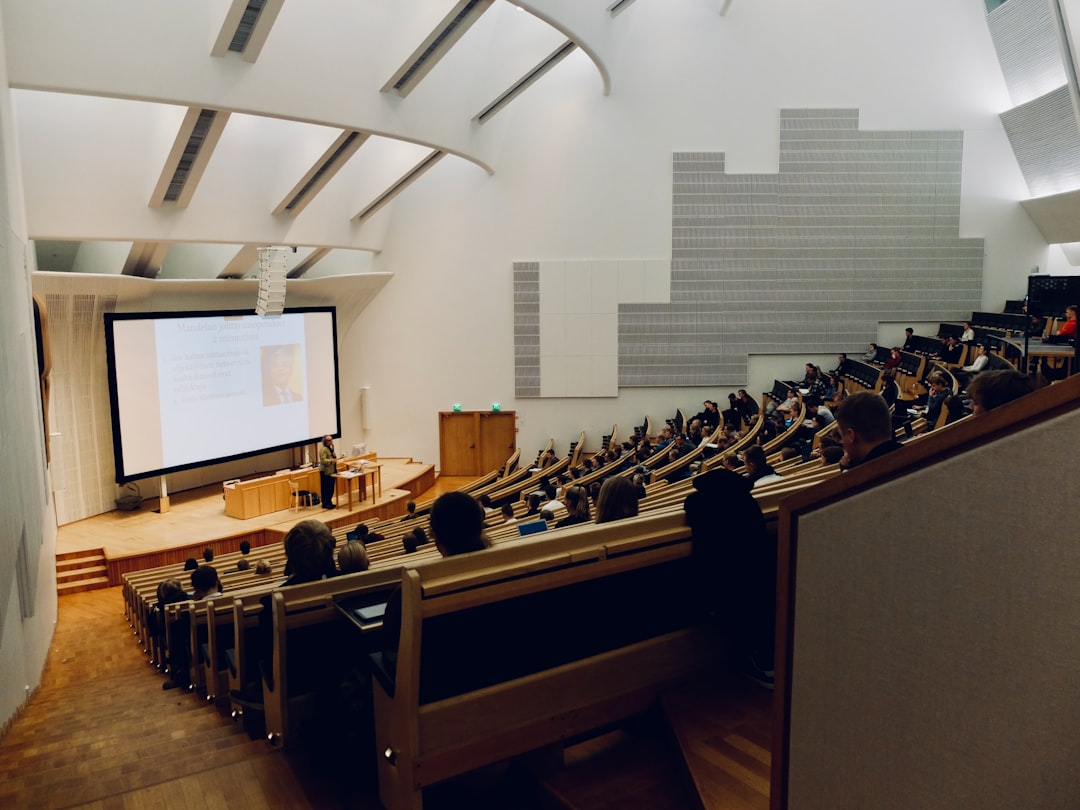
Remember the overhead projector? For decades, K-12 education looked remarkably similar from one generation to the next: a teacher at the front of the room, students in rows, a one-size-fits-all lesson delivered to thirty different minds with thirty different needs. The lecture hall model was never perfect. We just didn't have a better option.
Now we do.
AI in K-12 classrooms isn't a futuristic concept anymore. It's happening in schools right now — quietly, powerfully, and with real consequences for how students learn and how teachers teach. The shift isn't about replacing educators. It's about breaking the one-way flow of information and replacing it with something far more dynamic: a learning loop.
What Is a Learning Loop (and Why Does It Matter)?
A learning loop is a continuous cycle where instruction, practice, feedback, and adaptation happen in close sequence — ideally in real time. Traditional classrooms struggle to complete this loop. A teacher delivers a lesson, students complete an assignment, the teacher grades it days later, and by the time feedback arrives, the moment for correction has passed.
AI compresses that loop dramatically. Feedback that once took days now takes seconds. Patterns that would take a veteran teacher weeks to notice in student work can be surfaced in a single session. The result? Students course-correct faster. Teachers intervene earlier. Learning actually sticks.
This is the fundamental promise of adaptive teaching strategies powered by AI — and it's no longer theoretical.
How AI Is Changing the Classroom in Real Time
1. Instant Feedback That Actually Teaches
One of the most persistent frustrations in education is the feedback gap. Students submit an essay on Monday. They get it back on Thursday with a grade and a few margin notes. The emotional investment in the work has faded, and the specific mistakes are harder to connect to the learning moment.
AI-powered essay scoring changes this calculus entirely. Tools that provide rubric-aligned feedback in under 10 seconds don't just save time — they transform the feedback experience from a verdict into a conversation. When a student gets specific, sentence-level suggestions moments after submitting their work, they're still in the mindset of a writer. The feedback lands differently.
For teachers, this means the grading burden — which accounts for enormous portions of their non-instructional time — can be reduced by as much as 80%. That's not a small efficiency gain. That's hours returned to planning, mentorship, and the deeply human parts of teaching that AI can't replicate.
2. Personalized Learning That Scales Beyond the Classroom
Personalized learning has been an educational ideal for decades. The problem has always been execution. How does one teacher differentiate instruction for 30 students simultaneously, each at a different point in their understanding of quadratic equations or the causes of World War I?
AI makes this tractable. Adaptive classroom AI tools can identify where individual students are struggling, surface that information to teachers in digestible formats, and deliver targeted practice that meets each student at their actual level — not their grade level, their actual level.
Consider a practical scenario: a sixth-grade math class is working through fractions. The AI identifies that eight students have a specific misconception about equivalent fractions, while twelve others are ready to move to operations. Instead of the teacher re-teaching the whole class or leaving the advanced students under-challenged, differentiated pathways can run simultaneously — guided by AI, supervised by the teacher.
This is what personalized learning at scale actually looks like. Not a different worksheet for every kid, but intelligent routing based on real-time evidence of understanding.
3. Learning Doesn't Stop When the Bell Rings
Here's a question worth sitting with: what happens to a student's confusion at 9 PM on a Sunday night when they're stuck on a homework problem and their teacher isn't available?
For many students, the answer is: they give up, they guess, or they copy from a friend. None of those outcomes serve their learning. For students without access to private tutors or educated family members who can help, the inequality compounds over time.
24/7 AI homework support changes this dynamic. But the approach matters enormously. The most effective AI tutoring tools don't just hand students answers — they use Socratic questioning to guide students toward discovery. The difference between telling a student the answer and helping them reason their way to it is the difference between a shortcut and actual learning.
When student engagement technology is designed around genuine understanding rather than answer delivery, the results show up in retention, confidence, and long-term academic performance. Schools that have implemented this kind of always-on support have seen student churn drop by 40% — a statistic that speaks to something deeper than convenience. Students stay engaged when they feel supported.
4. Empowering Teachers to Teach Better, Not Just Faster
Let's address the concern that hovers over every AI-in-education conversation: are we replacing teachers?
No. And the evidence actually points in the opposite direction.
The most promising classroom AI tools aren't designed to substitute for teacher judgment — they're designed to amplify it. Real-time AI assistance during live tutoring or teaching sessions can surface insights about student misconceptions that even experienced educators might miss. It can suggest instructional strategies tailored to a specific student's learning profile. It can free up cognitive bandwidth so teachers can focus on connection, encouragement, and the nuanced human work that defines great teaching.
Think about what it means to onboard a new teacher or tutor. Traditionally, it takes months before they develop the pattern recognition of a veteran — recognizing which explanations work, which students need a different approach, which misconceptions are predictable at a given grade level. AI can compress that learning curve dramatically, delivering consistent instructional quality from day one.
This is the vision behind AI tutoring co-pilot tools: not a replacement for human expertise, but a force multiplier that makes tutors 2-3x more effective and helps institutions deliver consistent quality at scale.
5. Assessment That Meets Students Where They Are
Test prep and practice assessment have long been bottlenecks in K-12 education. Creating high-quality, test-aligned practice questions requires significant expertise and time. Licensing existing question banks is expensive — often costing institutions $50,000 or more. And once a question bank is memorized by students, its value drops to zero.
AI practice test generators solve all three problems simultaneously. They create novel, test-aligned questions on demand — calibrated to specific difficulty levels and topics — so students always encounter fresh content that actually prepares them for what they'll face on test day. For schools running SAT, ACT, or AP prep programs, this represents a fundamental shift in how assessment resources can be deployed.
The deeper pedagogical value is this: unlimited practice without the anxiety of a high-stakes environment. Students can test their understanding repeatedly, review detailed explanations, and build genuine confidence before the stakes are real.
The Classroom of 2025 Isn't One Thing
What makes this moment in education genuinely exciting — and genuinely challenging — is that there's no single model for how AI integrates into K-12 classrooms. Some schools are using it to supercharge test prep programs. Others are deploying it to support after-school tutoring or extend the reach of small instructional teams. Publishers and edtech platforms are embedding it directly into the learning experiences they sell.
The common thread is this: the best implementations keep the teacher central, use AI to close the feedback loop faster, and treat personalization not as a marketing buzzword but as a genuine commitment to meeting every student where they are.
The lecture hall model served its purpose. But students aren't passive vessels waiting to be filled with knowledge — they're active learners who respond to challenge, feedback, relevance, and care. AI in K-12 classrooms, when thoughtfully designed and implemented, creates the conditions for all of those things to happen at once.
The learning loop has arrived. The question for educators, administrators, and edtech providers isn't whether to engage with it — it's how to do so in a way that genuinely serves students.
Frequently Asked Questions About AI in K-12 Classrooms
What does AI actually do in a K-12 classroom? AI in K-12 classrooms can provide instant feedback on student writing, generate personalized practice questions, offer 24/7 homework support, and give teachers real-time insights into student understanding. The most effective tools augment teacher instruction rather than replace it.
Does AI in classrooms replace teachers? No. AI classroom tools are designed to reduce administrative burden — like grading and assessment creation — so teachers can focus on instruction, mentorship, and relationship-building. Research consistently shows that teacher presence and connection remain critical to student outcomes.
How does personalized learning through AI work? AI-powered adaptive learning tools assess where individual students are in their understanding and deliver targeted content, questions, or feedback calibrated to their specific level. This allows differentiated instruction to happen simultaneously across an entire classroom.
Is AI homework help harmful to student learning? It depends on the design. AI homework tools that use Socratic questioning — guiding students to discover answers rather than providing them directly — support genuine learning. Tools that simply deliver answers can undermine it. Design philosophy matters enormously.
How much time can AI tools save K-12 teachers? AI-powered grading and feedback tools can reduce teacher grading time by up to 80%, returning significant hours to instructional planning and direct student support.